
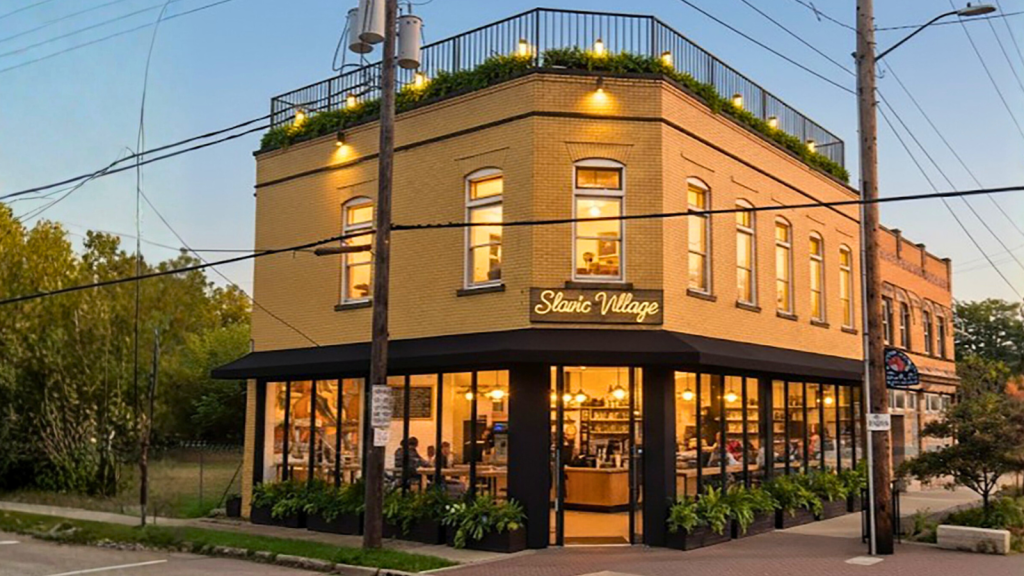
The Challenge: A “Fortress” Facade Hides the Potential
What would you do with a $50,000 grant to transform a building’s facade?
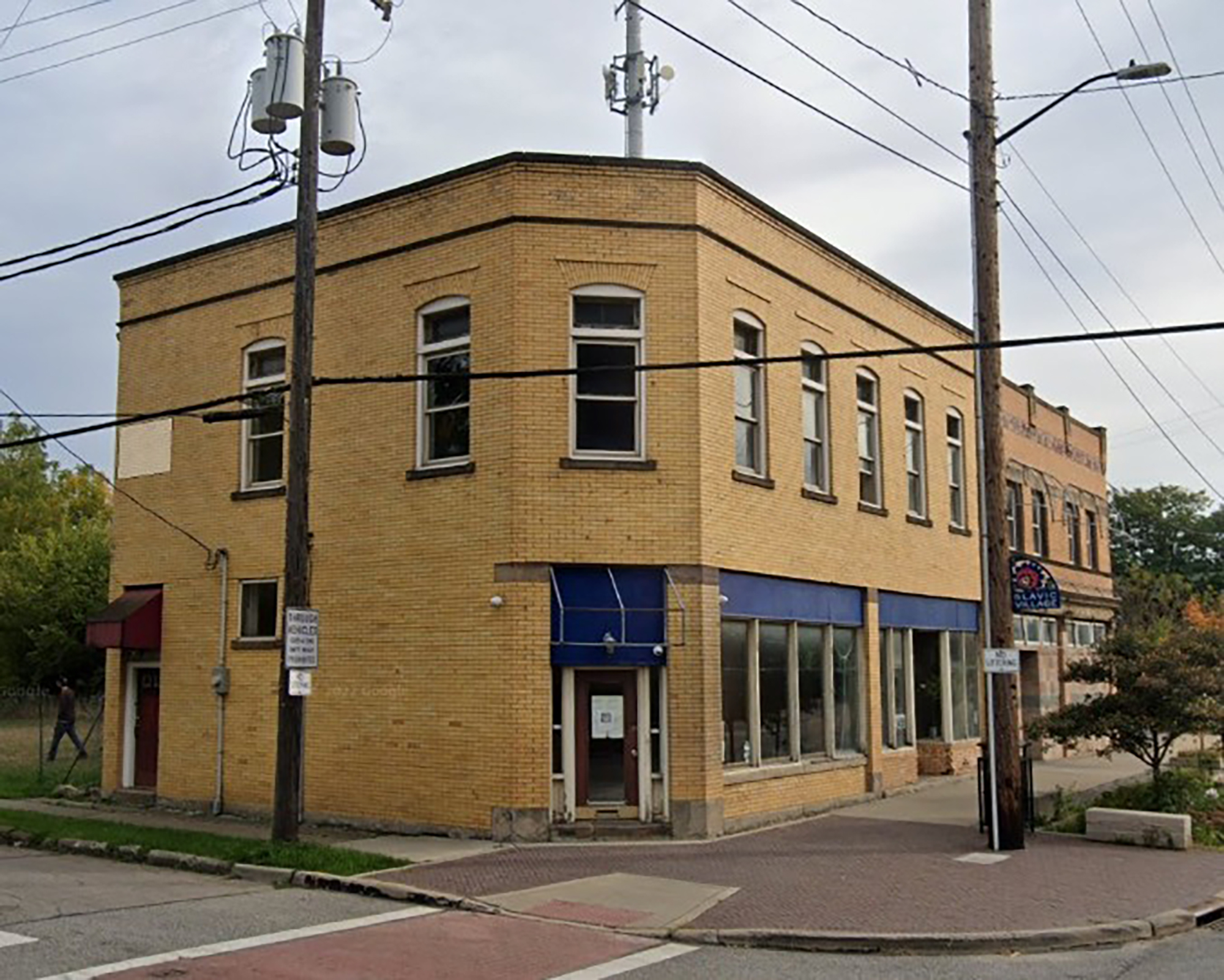
This isn’t just a hypothetical. For this historic yellow brick building in Cleveland’s Slavic Village, city funds were available to spark a revival. However, the existing building was working against itself.
The ground floor was closed-off, with small windows and heavy masonry that created a “fortress-like” appearance. It hid the activity inside and offered zero engagement with the street.
For a developer applying for a grant, the challenge is proving that the money will result in tangible community impact. A simple repair job wouldn’t be enough; it needed a transformation.
The Solution: Opening Up and Going Up
We focused on transforming the property from a “forgotten storefront” into a “vibrant community hub.” Our visualization strategy was designed to show the city and investors exactly where the value lies.
Key Strategic Moves:
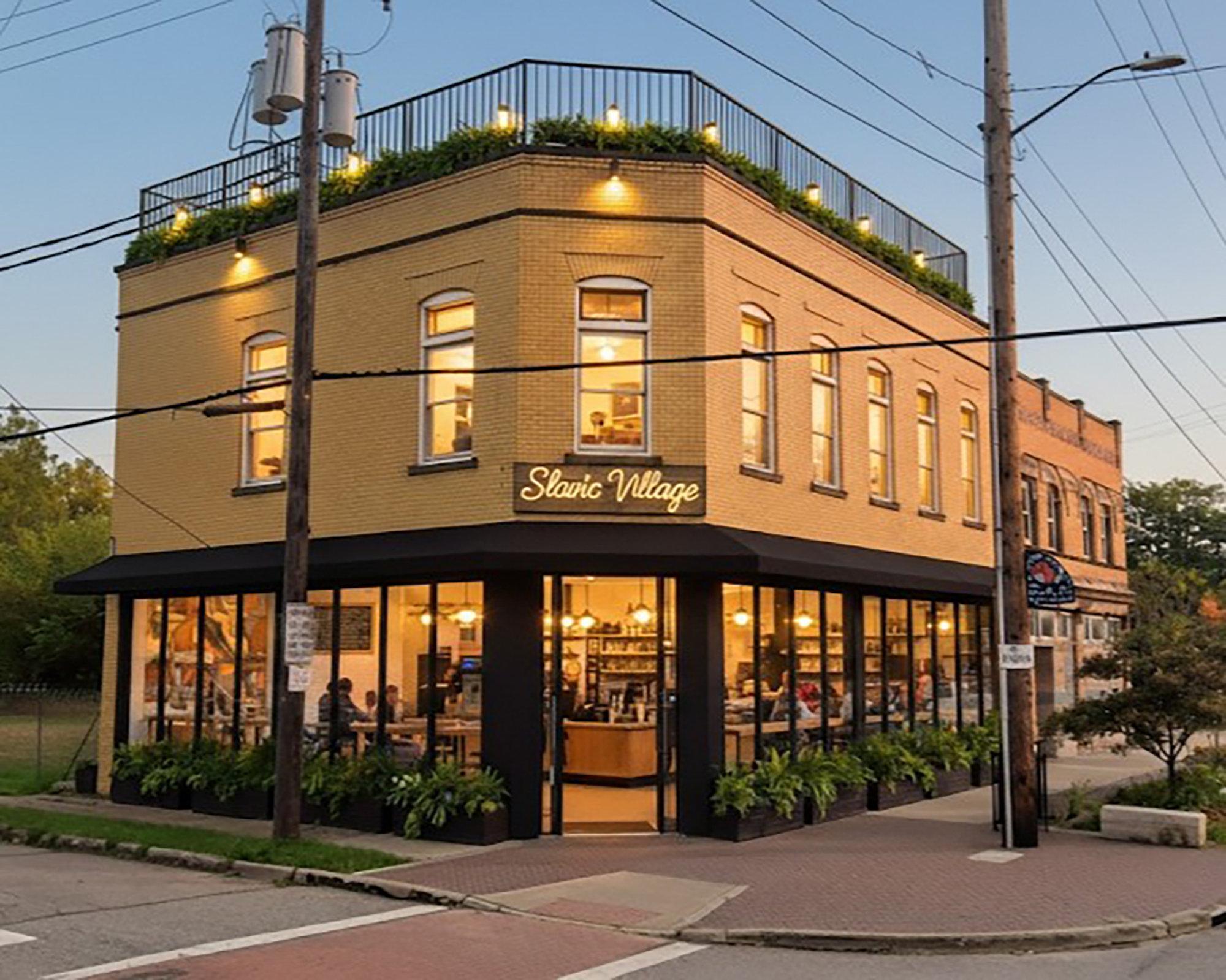
- (√) Radical Transparency (Ground Floor): We replaced the dated, closed-off facade with floor-to-ceiling glass. This turns the interior activity (a warm cafe) into a billboard for the street, instantly energizing the corner and making the building feel safer and more inviting.
- (√) Rooftop Activation: We visualized a new Rooftop Deck with greenery and lighting. In urban development, this is “found money”—turning unused flat roof space into a premium amenity for patrons or tenants.
- (√) Historic Respect: We kept the original yellow brick character on the upper floors, showing that you can modernize a building without erasing its history.
The Transformation
The “Before”: The Closed-Off Corner
The “After”: The Community Beacon
The Result: Visualizing the ROI of a Grant
This is a prime example of how strategic visualization acts as a bridge. It connects:
- The Grant: Helping officials see the community benefit.
- The Building: Respecting the historic structure.
- The Future: Showing a profitable, thriving business model.
By presenting a clear “After” vision, developers can secure funding faster and attract tenants before construction even begins.

 SPACEMOTION VISUALS
Leave a comment