
If you are a manufacturer of premium building materials, luxury furniture, or architectural fixtures, you know the absolute nightmare of traditional product photography.
You have to rent a studio. You have to hire carpenters to build a temporary, fake room. You have to source props, hire a lighting crew, and after a grueling two-day shoot, you tear it all down and throw it in the dumpster. If you want to show your product in a different color next month? You have to do it all over again.
It is slow, incredibly expensive, and limits your creative freedom. (There is a reason why over 75% of IKEA’s catalog images are actually 3D renders, not photographs).
Your clients don’t just buy a piece of wood or a slab of marble. They buy the lifestyle it represents. At Spacemotion Visuals, we help luxury brands eliminate logistical headaches by placing their products inside breathtaking, photorealistic 3D environments. You get absolute control over the lighting, the angles, and the mood.
Here are 7 examples of how 3D product visualization outperforms physical photography in the luxury market.
1. Premium Hardwood Flooring: Controlling the Perfect Glare
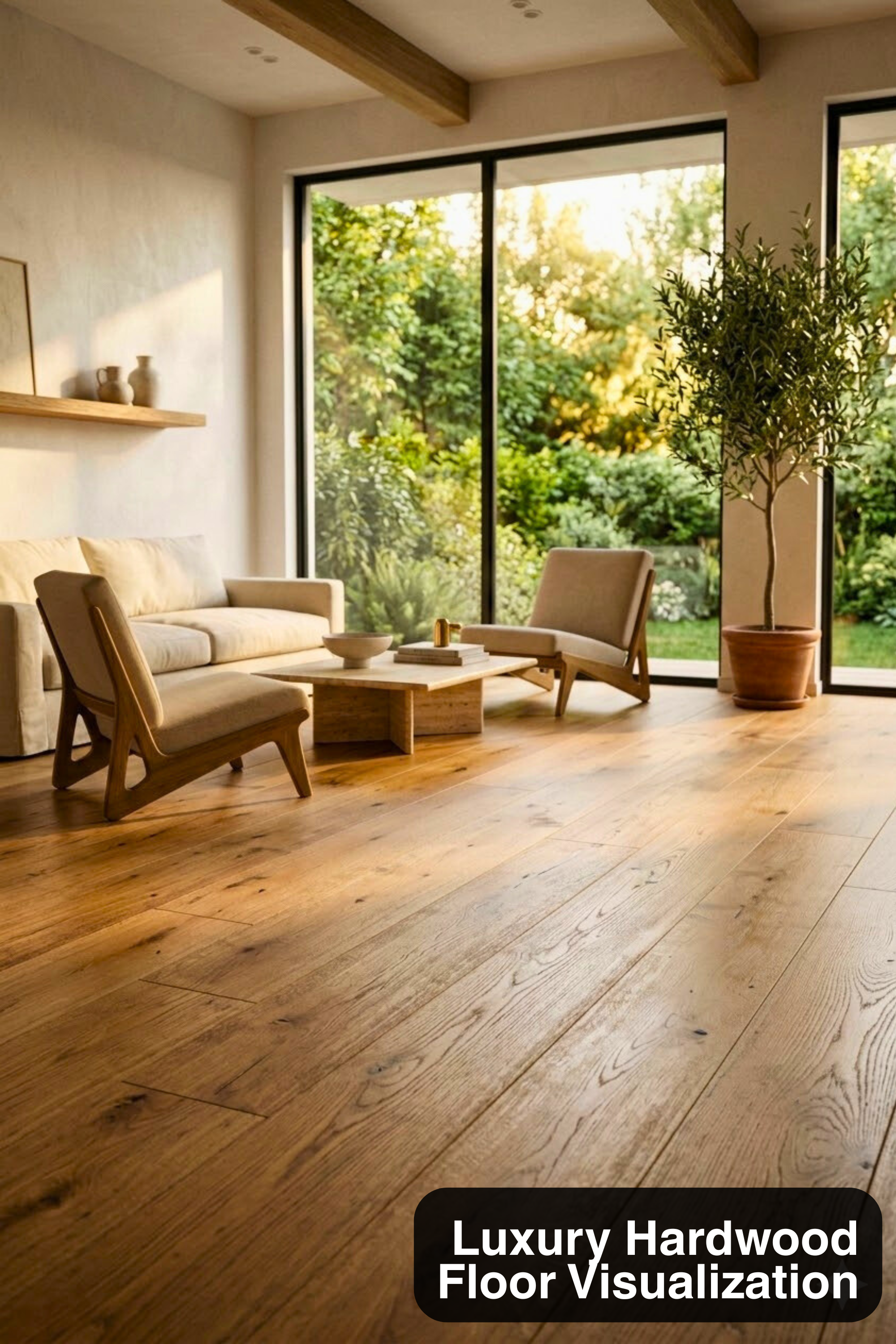
The Photography Problem: Shooting wide expanses of flooring is notoriously difficult. Studio lights easily create harsh, unwanted reflections on polished surfaces, and dust is magnified by the camera. The 3D Advantage: We have absolute control over the sun. In this visualization, we positioned the afternoon light to sweep across the floor at the exact angle needed to highlight the rich, tactile grain of the oak wood, creating a warm and inviting living space. No studio lights, no dust, just pure texture.
2. Acoustic Wood Paneling: The Executive Atmosphere
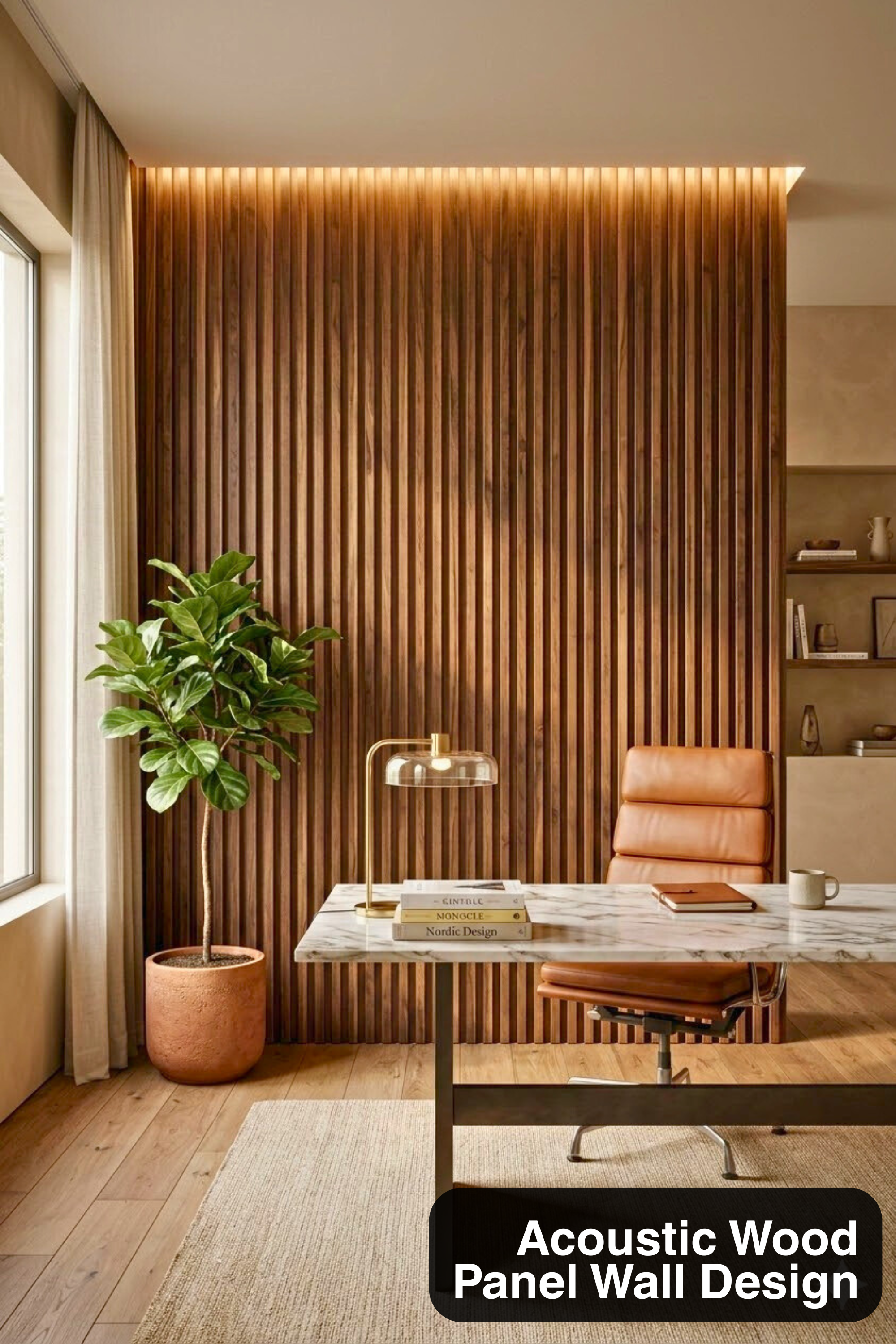
The Photography Problem: Swapping out large architectural wall panels in a physical studio to photograph different wood stains requires a construction crew. The 3D Advantage: We built a refined, high-end home office environment specifically to sell the sophistication of these slatted wood panels. By integrating hidden cove lighting at the ceiling, we emphasize the depth and verticality of the product. Want to see it in dark walnut or black oak? In 3D, changing the material takes a few clicks, not a few days.
3. Architectural Lighting: Defeating “Overexposure”
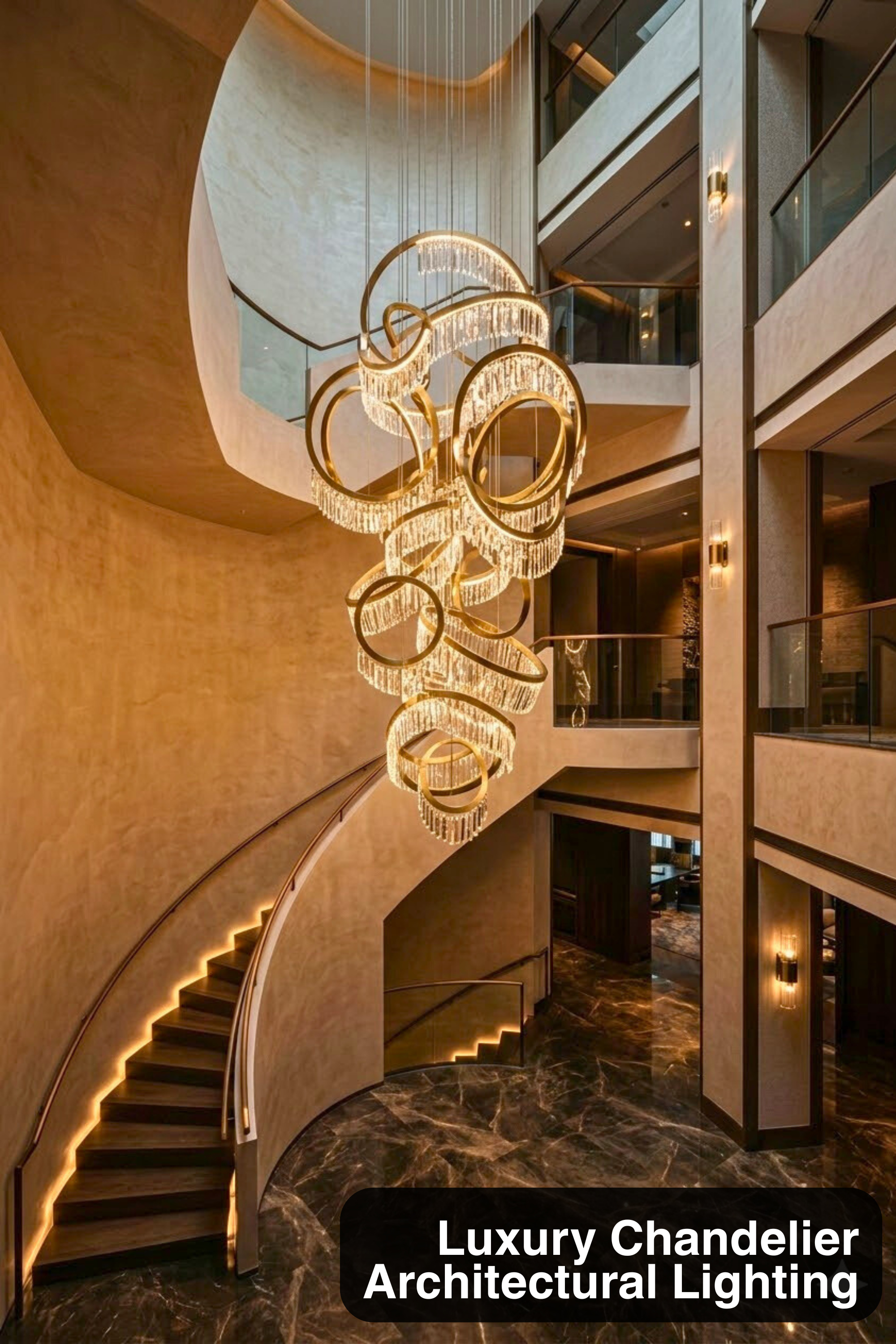
The Photography Problem: Physical cameras struggle with extreme contrast. If you focus on a glowing chandelier, the surrounding room goes pitch black. If you expose the room, the chandelier turns into a blinding white blur. The 3D Advantage: CGI does not have camera limitations. We visualized this massive, cascading crystal and brass chandelier inside a multi-story grand staircase. The 3D engine allows us to show the exquisite detail of the crystals while maintaining the moody, dramatic ambiance of the surrounding architecture.
4. Modular Luxury Kitchens: Infinite Variations
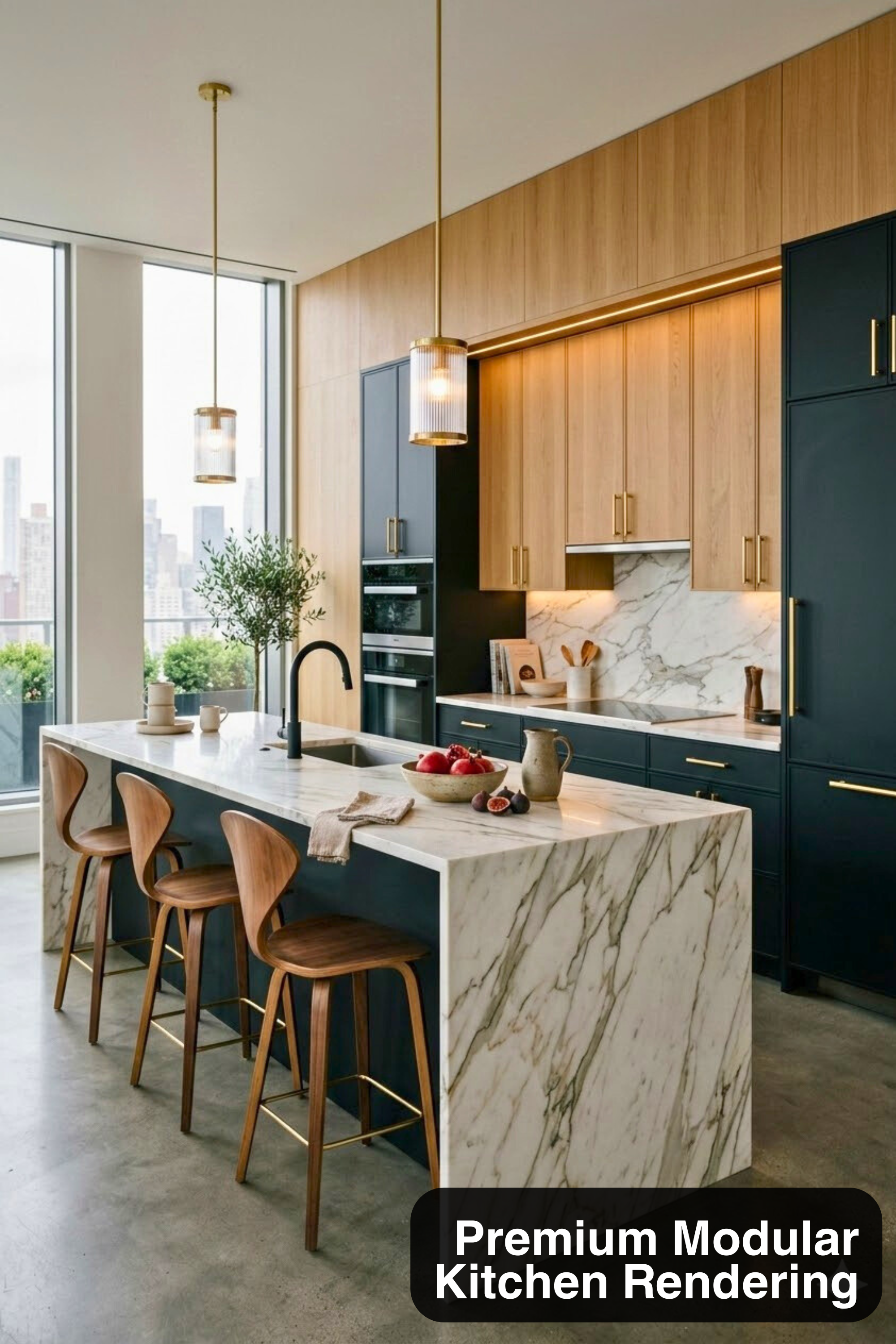
The Photography Problem: Kitchen manufacturers need to showcase multiple configurations—matte black cabinets, natural oak finishes, marble islands. Building multiple real kitchens for a catalog is financially impossible. The 3D Advantage: We designed a Manhattan-style luxury penthouse kitchen to showcase material harmony. We can perfectly render the intricate veining of the marble waterfall island against the smooth matte black cabinetry and warm wood tones. Once the 3D set is built, generating 20 different material variations for your catalog is effortless.
5. Oversized Pivot Doors: The Seamless Transition
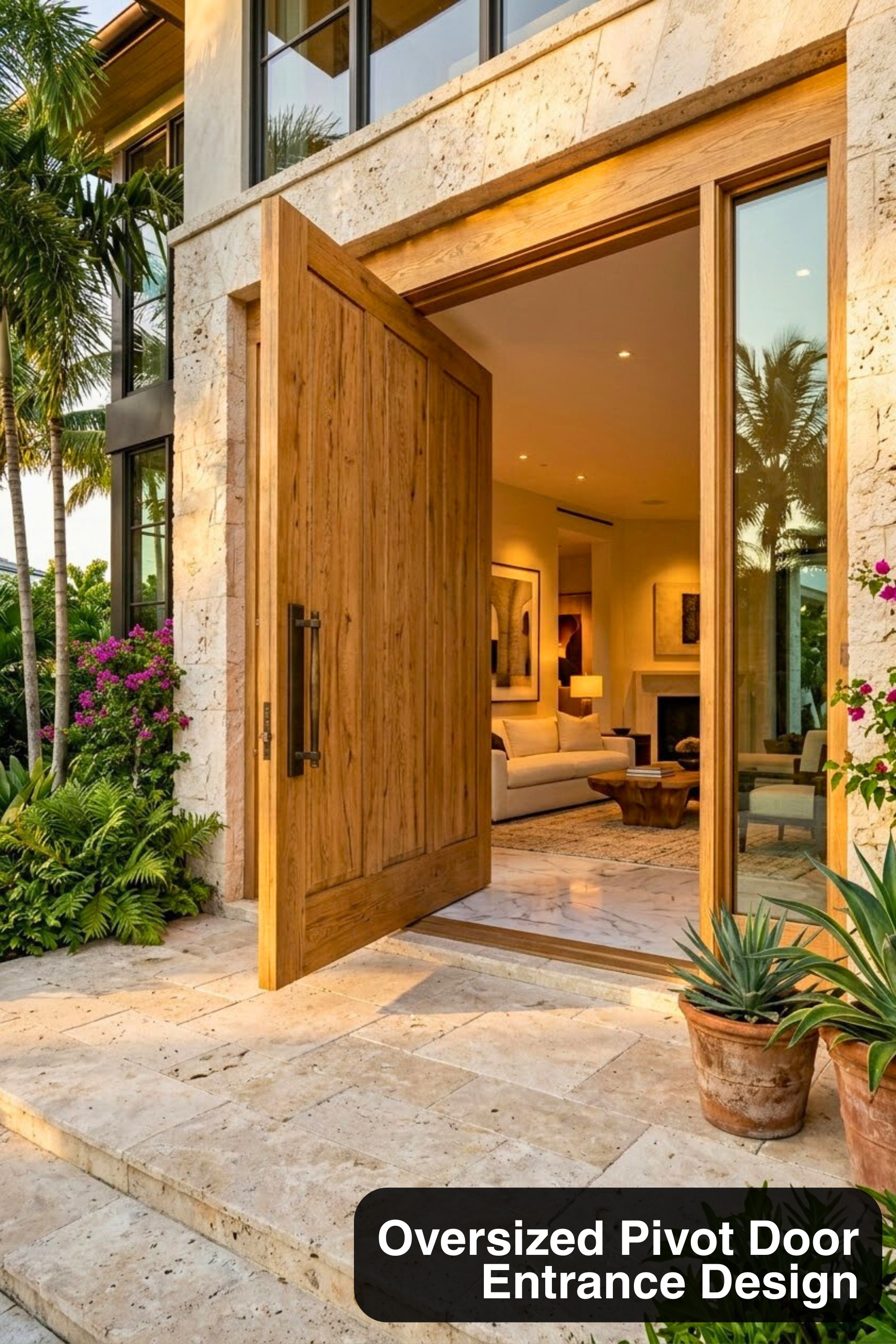
The Photography Problem: Massive exterior doors require perfect indoor and outdoor lighting simultaneously—a rare weather condition in the real world. The 3D Advantage: We visualized this heavy, solid-wood pivot door mid-swing, seamlessly connecting a bright, stone-paved exterior with a serene, softly lit interior living room. The lighting is balanced perfectly to show the sheer scale and premium craftsmanship of the door hardware.
6. Freestanding Bathtubs: Breaking Down Walls
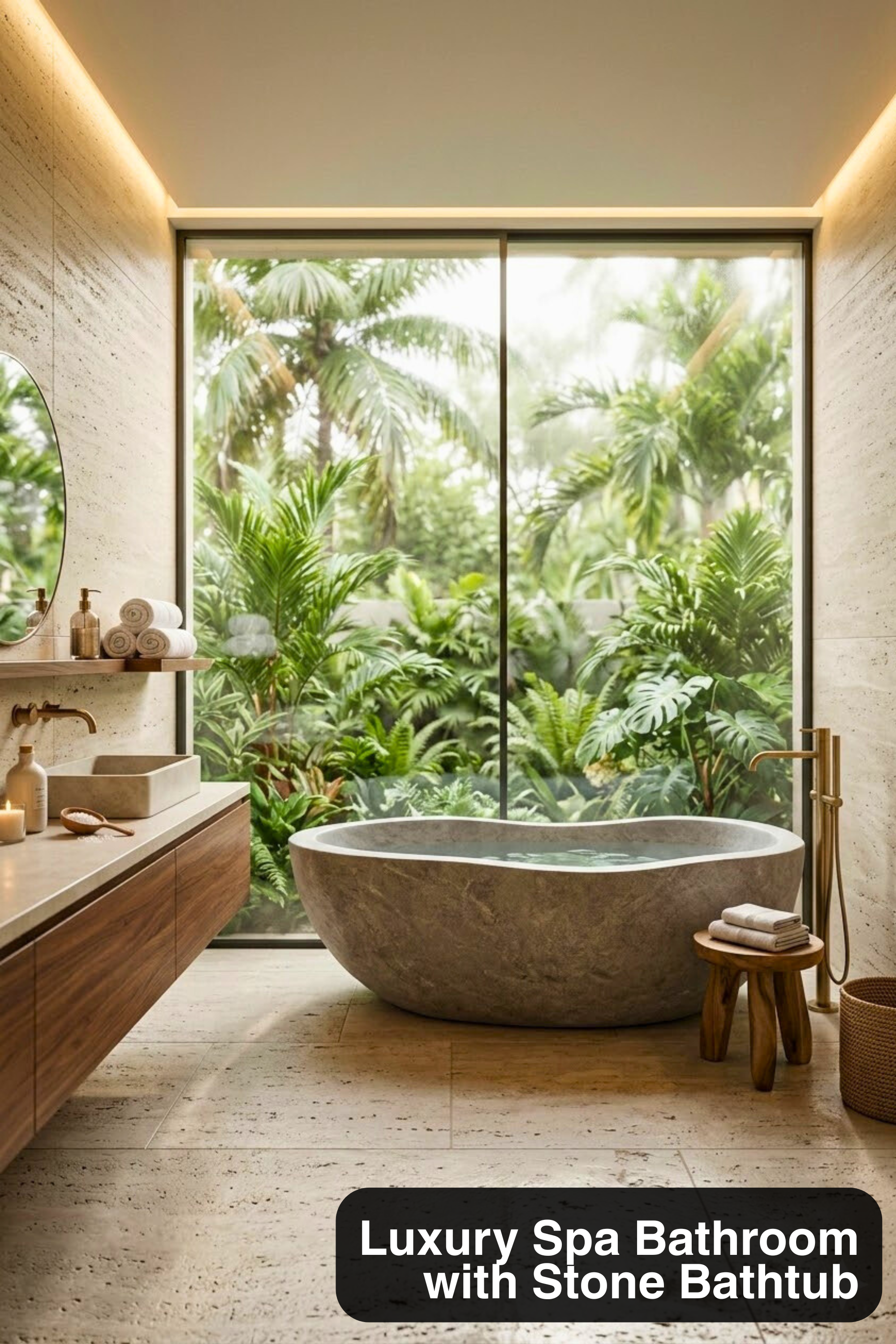
The Photography Problem: Bathrooms are tight spaces. Photographers constantly struggle to place their tripods without catching their own reflection in mirrors or glass. The 3D Advantage: In 3D, we can literally move walls to get the perfect camera angle. We placed this organic, stone-carved freestanding bathtub in a luxurious spa-like setting, featuring a massive floor-to-ceiling window overlooking lush tropical foliage. It sells an elite wellness lifestyle that resonates deeply with high-end buyers.
7. Composite Outdoor Decking: The Eternal Summer
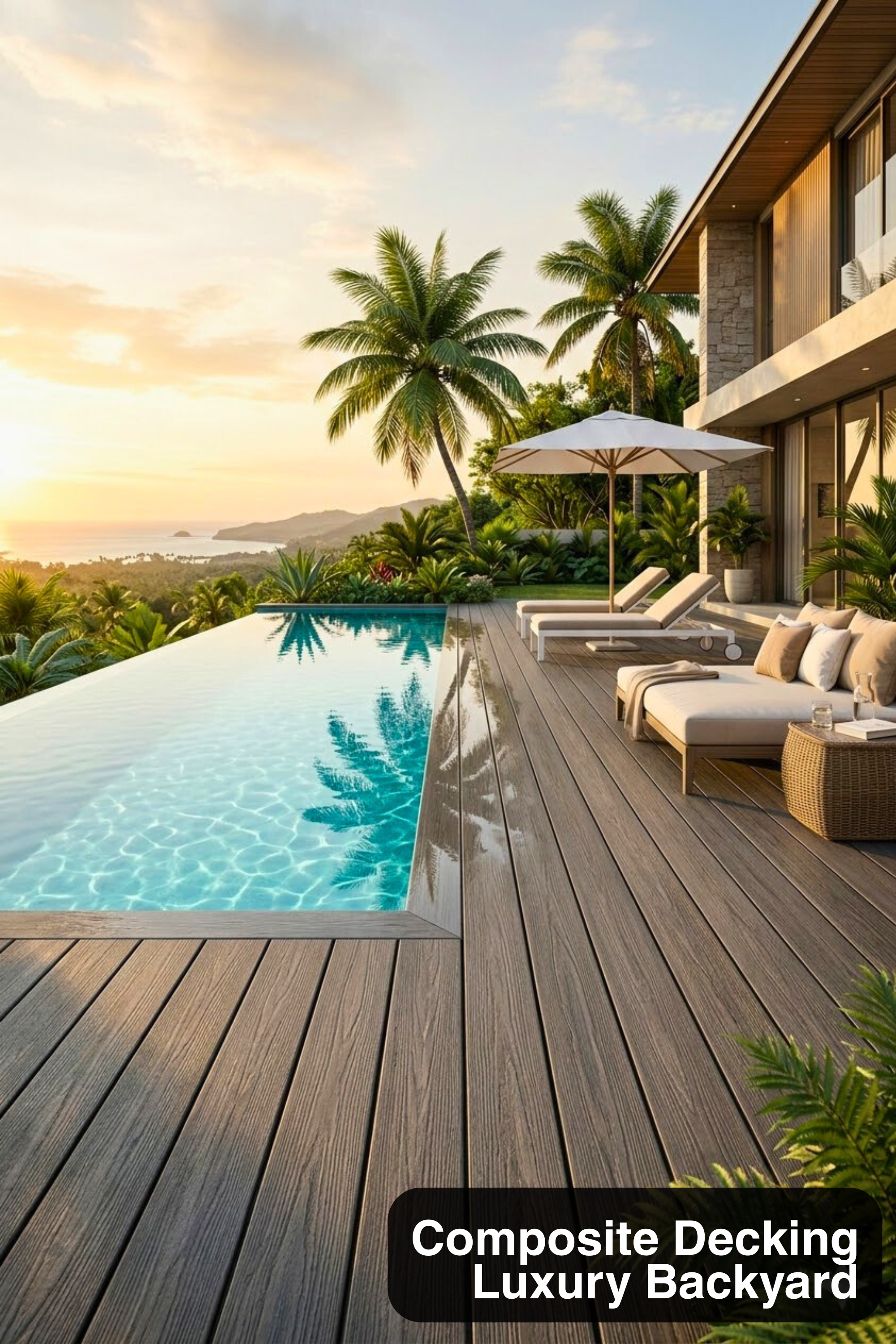
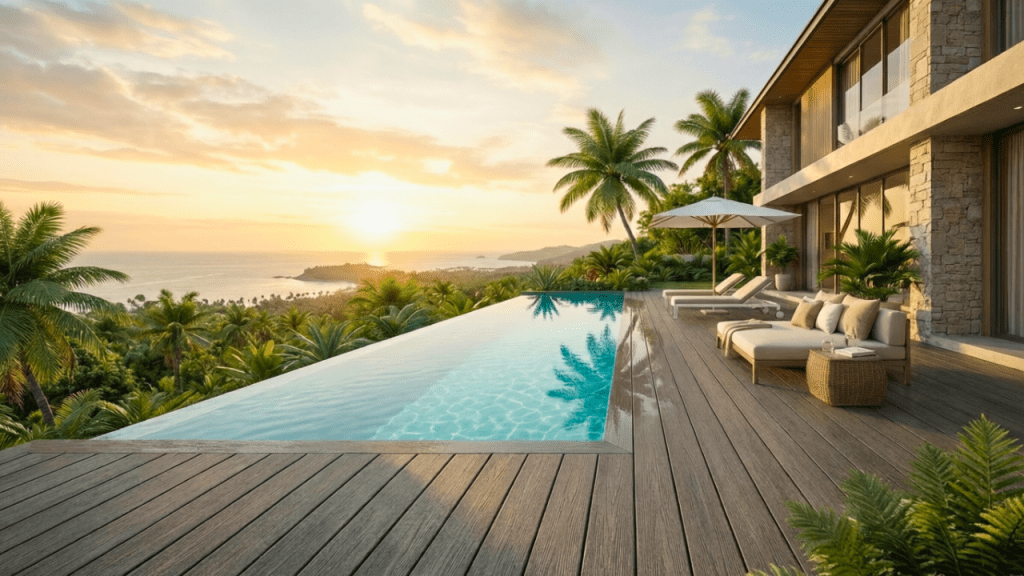
The Photography Problem: Outdoor material companies have to wait for the perfect weather, staging furniture outside, and hoping it doesn’t rain during the shoot. The 3D Advantage: We can guarantee a golden hour sunset every single time. Here, we showcased composite decking framing a stunning infinity pool overlooking the ocean. The reflection of the water on the deck and the precise alignment of the planks sell the ultimate “vacation at home” lifestyle.
Sell the Lifestyle. We’ll Build the Set.
Stop wasting your marketing budget on temporary photography sets, expensive studio rentals, and weather delays.
If your brand sells premium architectural materials, furniture, or home fixtures, you need visuals that match the quality of your engineering. 3D visualization offers unmatched flexibility, perfect lighting, and the ability to place your product in settings your clients can only dream of.
Are you ready to elevate your product catalog? Send me your product specifications, CAD files, or reference photos, and let’s discuss how we can build the perfect digital stage for your brand.

 SPACEMOTION VISUALS
Leave a comment