
Global energy markets are volatile. With ongoing geopolitical tensions disrupting supply chains, the era of cheap, limitless energy is coming to an end. Relying on mechanical air conditioning to run 24/7 is rapidly transforming from a modern convenience into a massive financial liability.
Whether we face a crisis or simply the inevitable transition to renewable energy, the architectural mandate is clear: Homes must become self-sufficient.
Enter Passive Design and Building Biology.
By designing homes that work with the local climate rather than fighting against it, we can create incredibly comfortable, luxurious spaces that require a fraction of the energy to maintain. At Spacemotion Visuals, we help future homeowners visualize not just the aesthetics of their home, but its environmental performance.
Here are 7 passive design strategies we visualized to future-proof your next build:
1. “This Home Stays Cool Without AC”
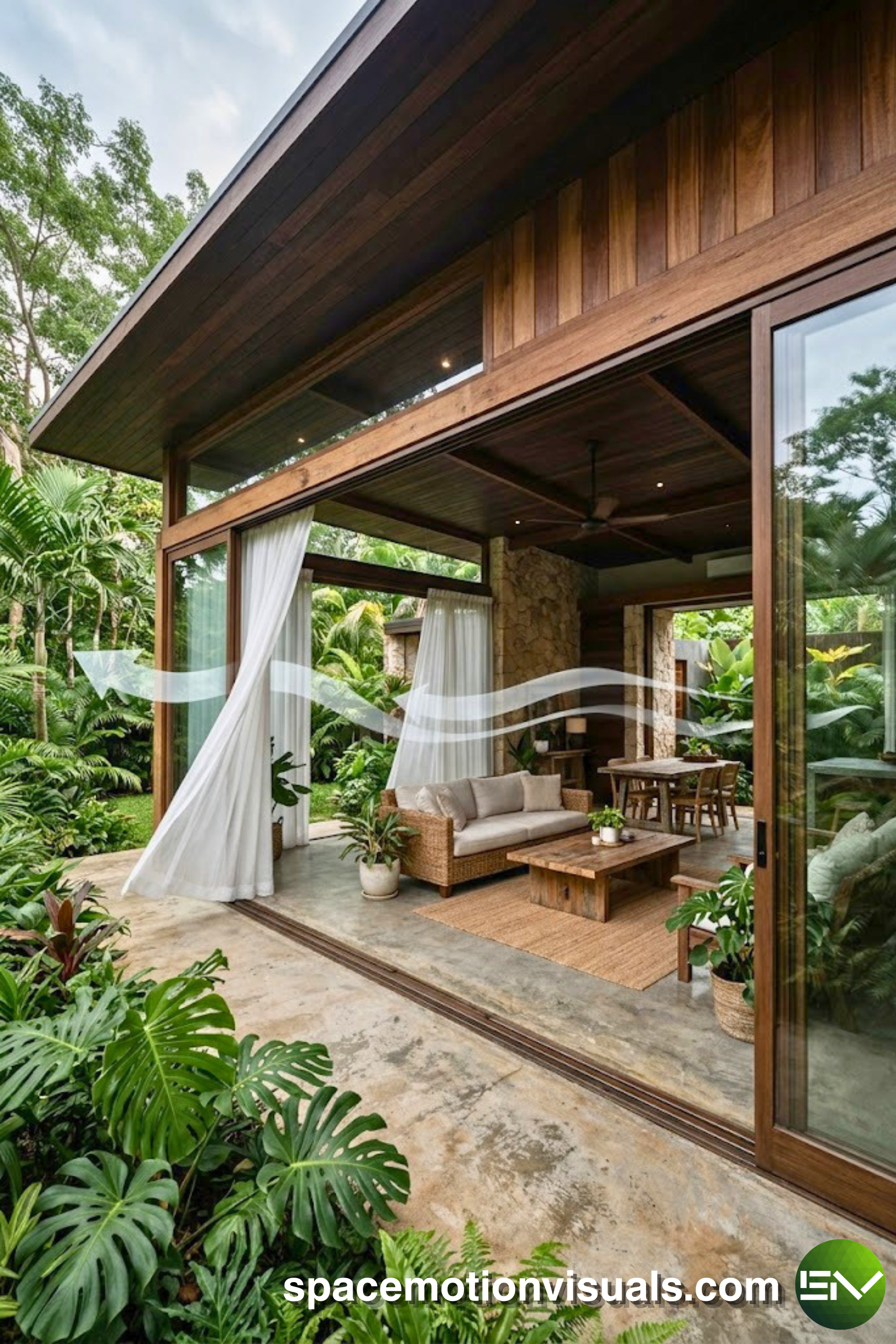
The Concept: Strategic shading and thermal comfort. The Strategy: Beating the heat isn’t just about insulation; it is about stopping the sun from hitting the glass in the first place. We visualized deep roof overhangs and expansive shaded terraces that act as a buffer zone. By keeping the direct sun off the main living areas, the interior remains naturally cool, drastically reducing the need for constant air conditioning.
2. “Designed Around the Sun, Not Against It”
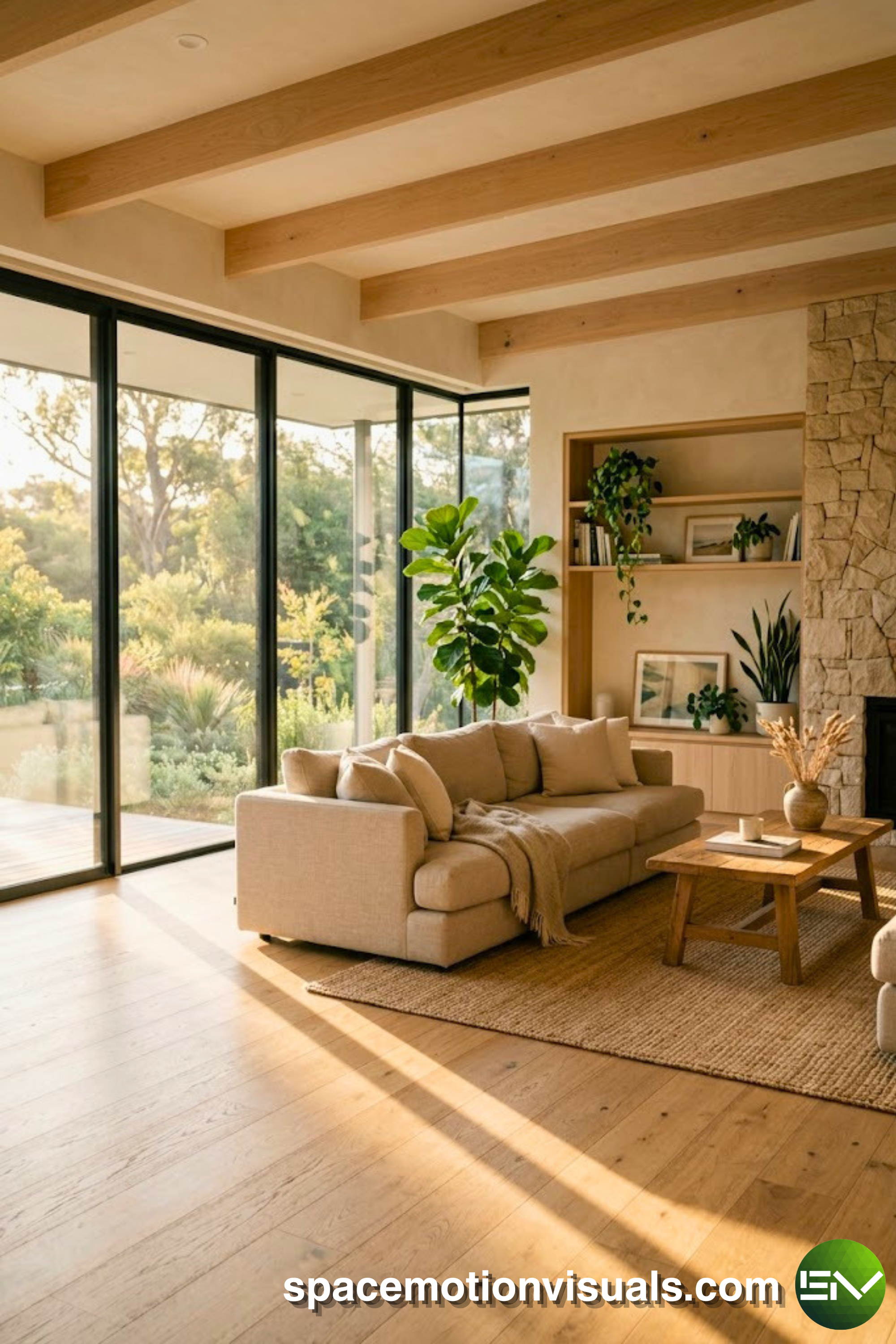
The Concept: Solar Orientation. The Strategy: Intelligent design starts with positioning. By orienting the primary living spaces to capture the right angles of the sun, we maximize natural daylight while minimizing heat gain. The warm, natural light floods the room, eliminating the need to turn on a single lightbulb during the day, while maintaining a perfectly balanced internal temperature.
3. “A Home That Breathes With Nature”
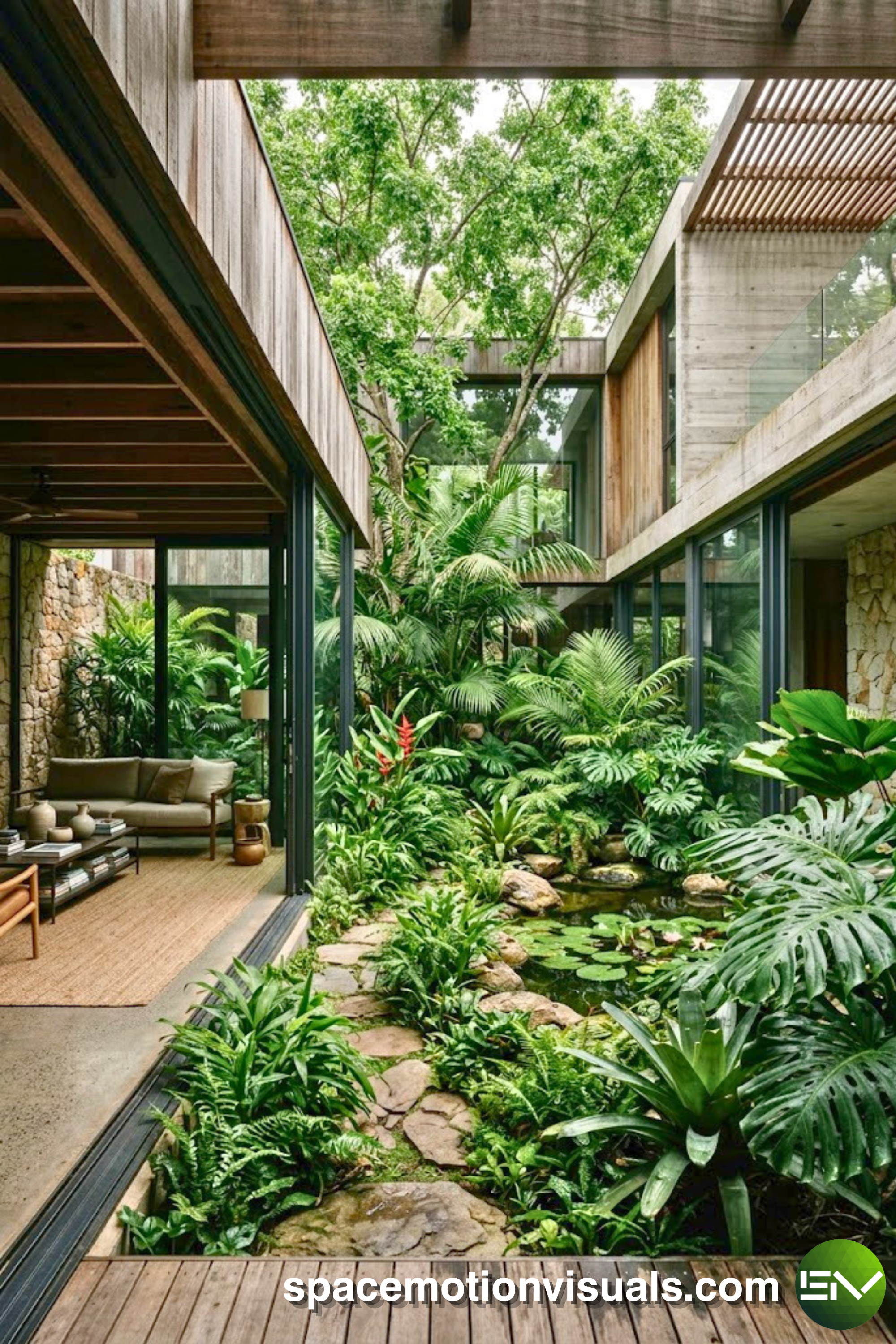
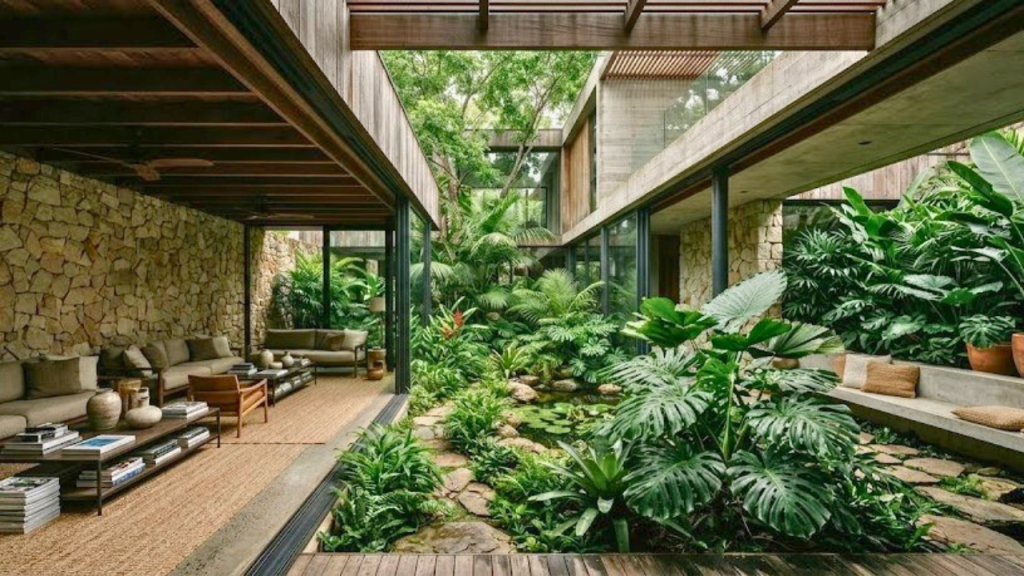
The Concept: Biophilic microclimates. The Strategy: We integrated a lush inner courtyard featuring a natural water element directly adjacent to the living spaces. This isn’t just for aesthetics; it’s active building biology. As air passes over the water and plants, it naturally cools before entering the home (evaporative cooling), creating a fresh, restorative microclimate that supports both your wallet and your respiratory health.
Struggling to calculate the perfect roof overhangs or figure out how to integrate a cooling biophilic courtyard into your floor plan?
Passive design is an exact science. If you miscalculate your solar orientation or window placement on a flat 2D blueprint, your new build could easily turn into an expensive greenhouse instead of an energy-efficient sanctuary. Don’t leave your home’s thermal comfort and your future energy bills to guesswork. Let us build your sustainable home virtually first, allowing you to test sun paths, natural lighting, and architectural shading with photorealistic precision before you pour the foundation.
4. “Small Home, Smart Living”
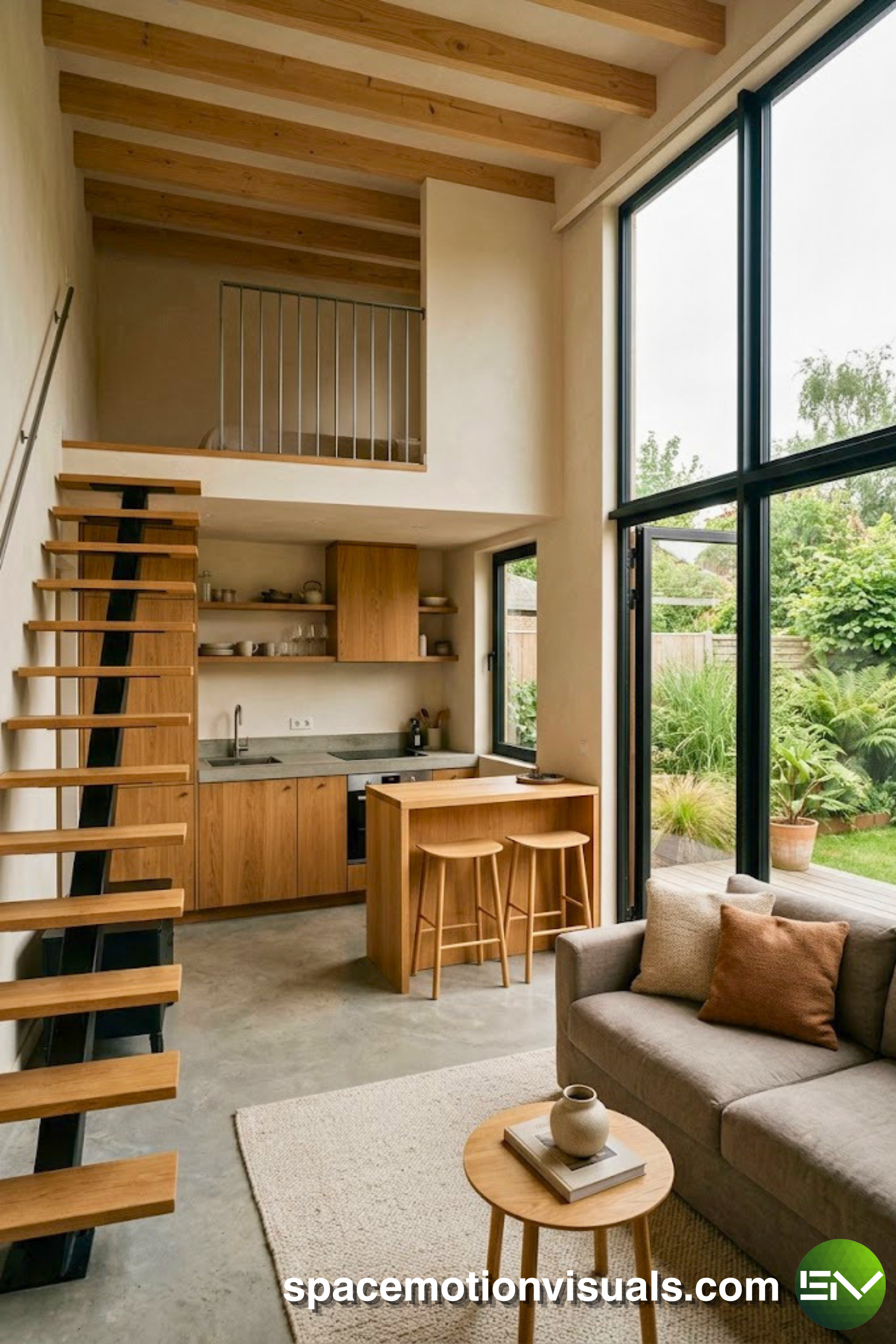
The Concept: Spatial efficiency. The Strategy: In a tight economy, building massive, unused spaces is a waste of both construction budget and energy. We visualized a highly compact, double-height living and kitchen area. A smaller footprint means significantly less air volume to cool or heat, yet the high ceilings and large windows ensure the home feels expansive and luxurious.
5. “Let the Wind Do the Work”
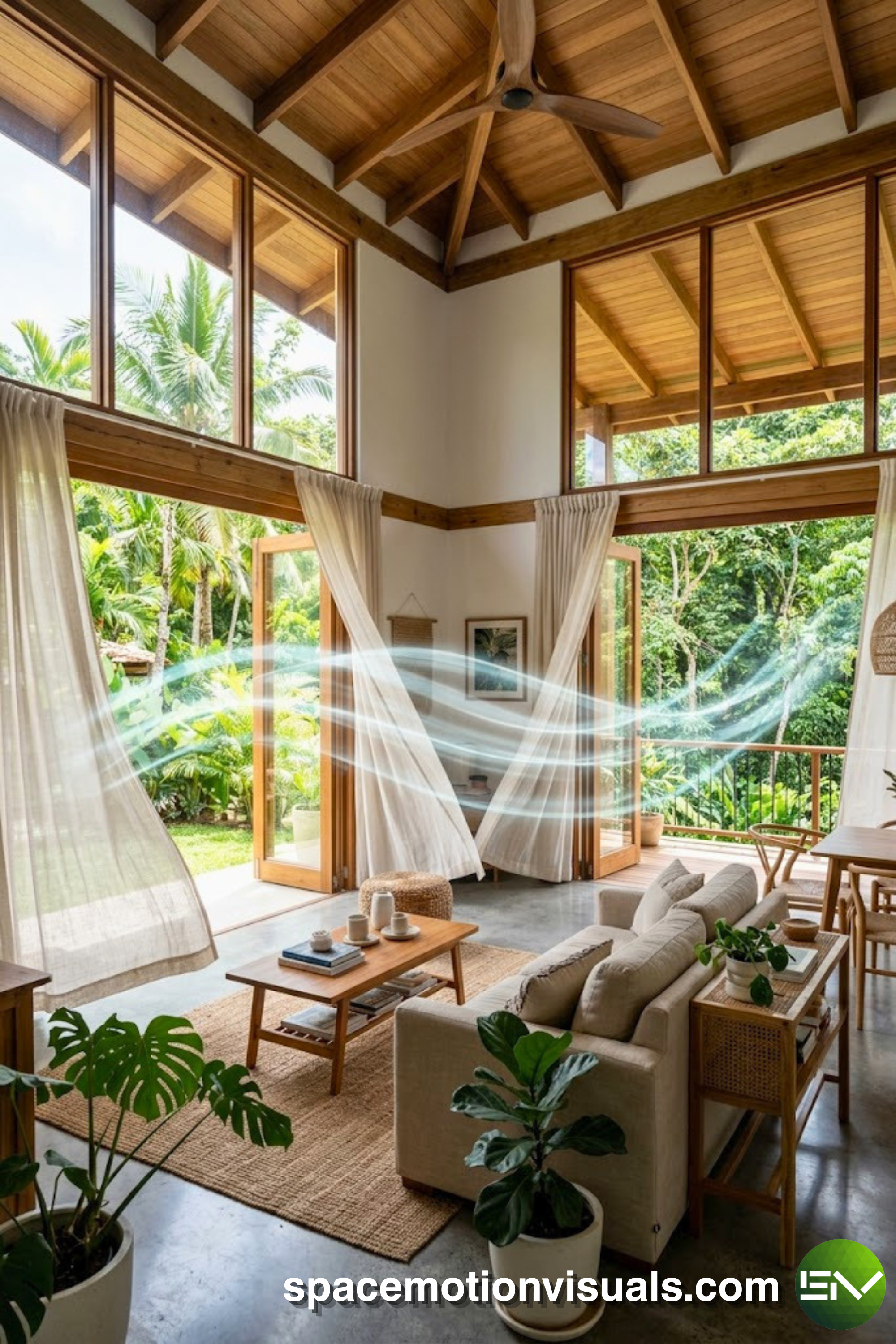
The Concept: Masterful cross-ventilation. The Strategy: You cannot control the wind, but you can design a building to catch it. By strategically placing large, operable glass doors on opposite ends of the living space, we create a natural wind tunnel effect. This flushes out stale, hot air and constantly refreshes the home’s atmosphere silently and cost-free.
6. “Modern Home, Minimal Energy Waste”
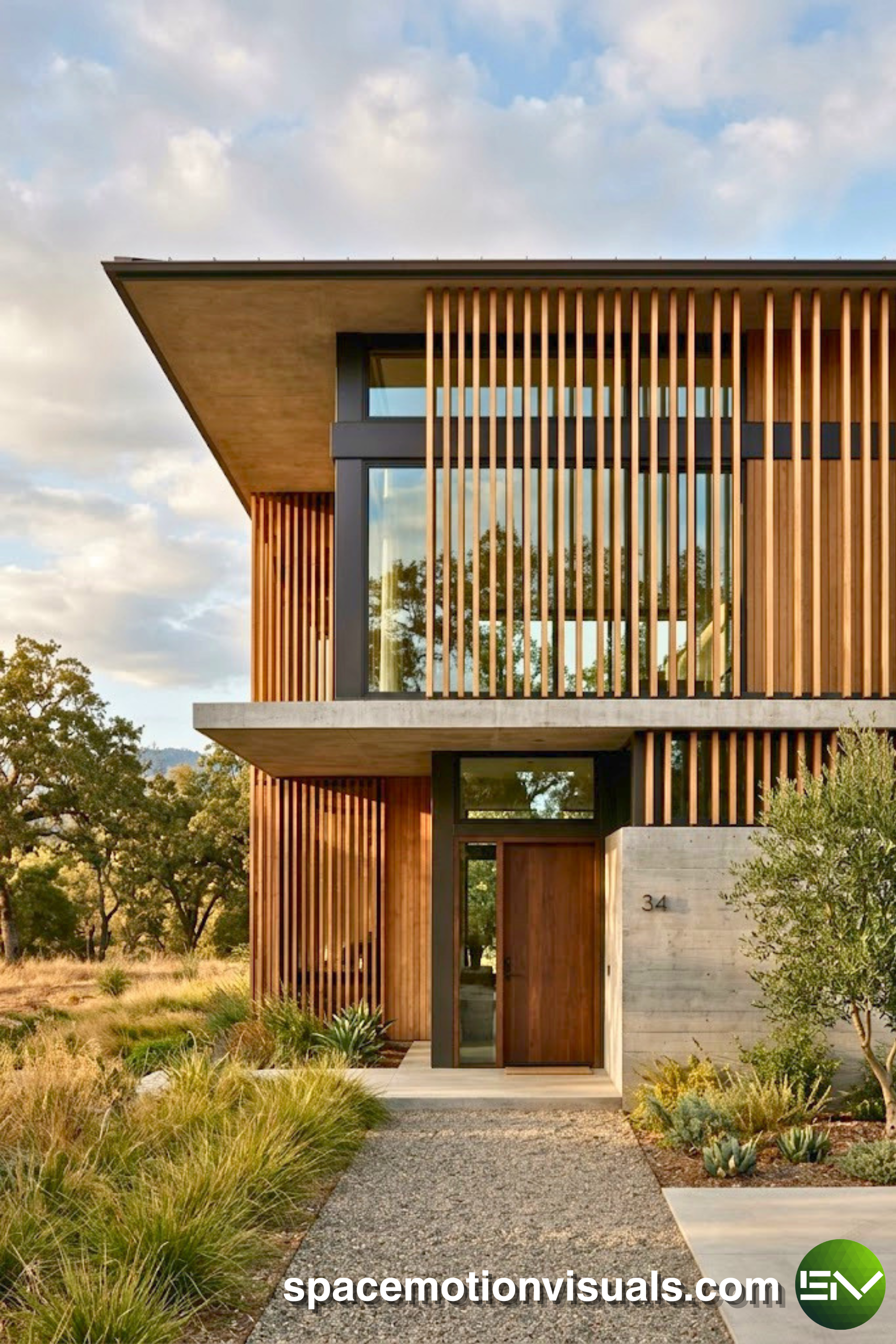
The Concept: The architectural shield. The Strategy: Modern design often relies heavily on glass, which can turn a house into a greenhouse. We countered this by visualizing vertical timber slats (brise soleil) along the facade. These architectural elements block the harshest angles of the afternoon sun while still allowing light and air to filter through, merging sleek modern aesthetics with uncompromising energy efficiency.
7. “Wake Up With Natural Light, Not Electricity”
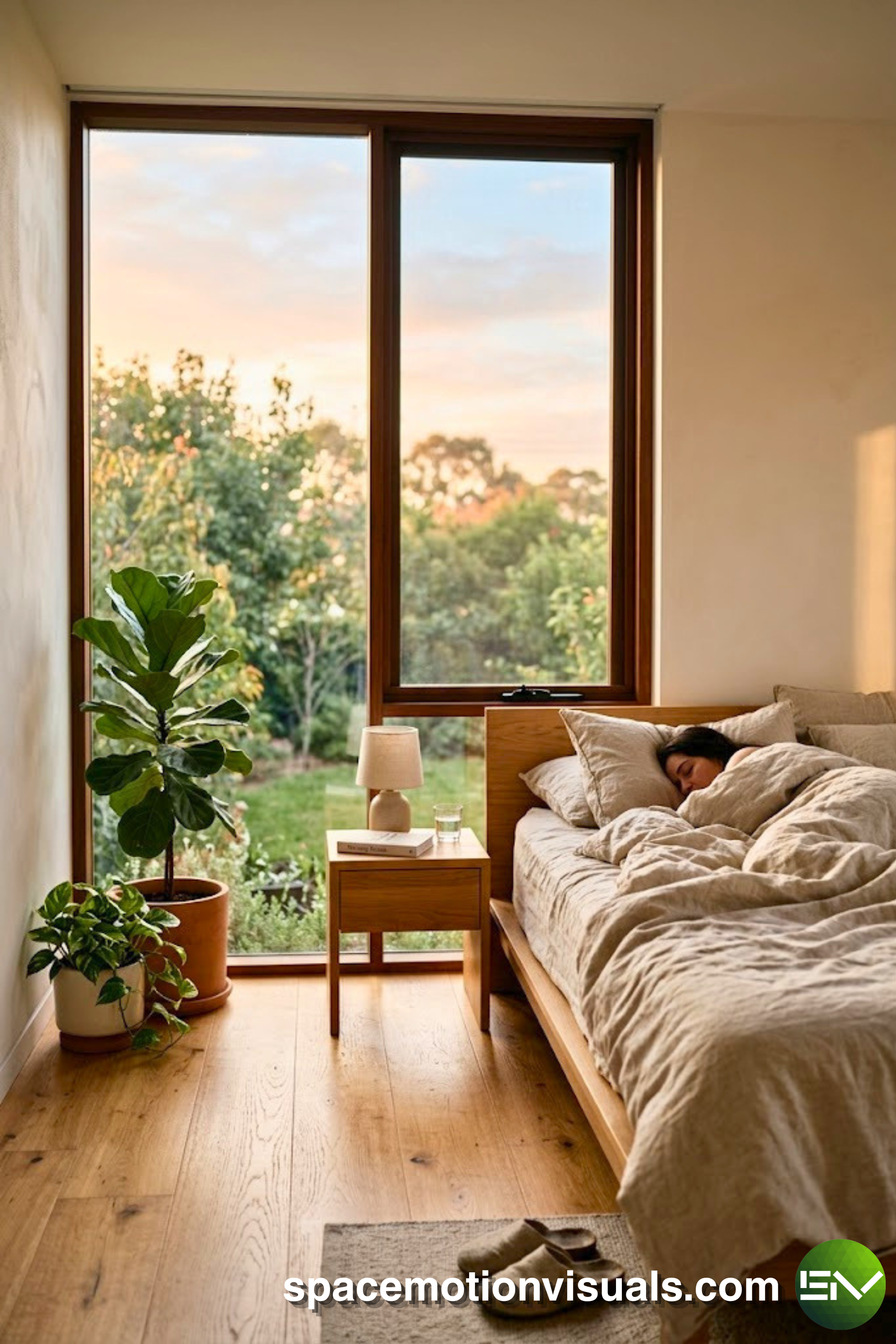
The Concept: Designing for human neuroarchitecture. The Strategy: Your bedroom should sync with your natural circadian rhythm. By positioning the bedroom windows to capture the soft, indirect morning light, you wake up naturally to the view of the outdoors. It reduces early morning electricity usage and starts your day with lower cortisol levels and deeper mental clarity.
Don’t Build a Financial Burden.
Before you pour the concrete, you need to know how your house will perform. Will that massive west-facing window turn your living room into an oven? Will the layout actually catch the local breeze?
We visualize the unseen. At Spacemotion Visuals, we help you translate 2D blueprints into photorealistic 3D models. We can help you test window placements, roof overhangs, and shading devices to ensure your home is as environmentally intelligent as it is beautiful.
Are you ready to design a future-proof home? Send us your initial sketches or floor plans, and let’s visualize a home that works for you, not against you.


 SPACEMOTION VISUALS
Leave a reply to Farid Indra Gunawan Cancel reply